

Edward Elgar: The Man Behind the Enigma
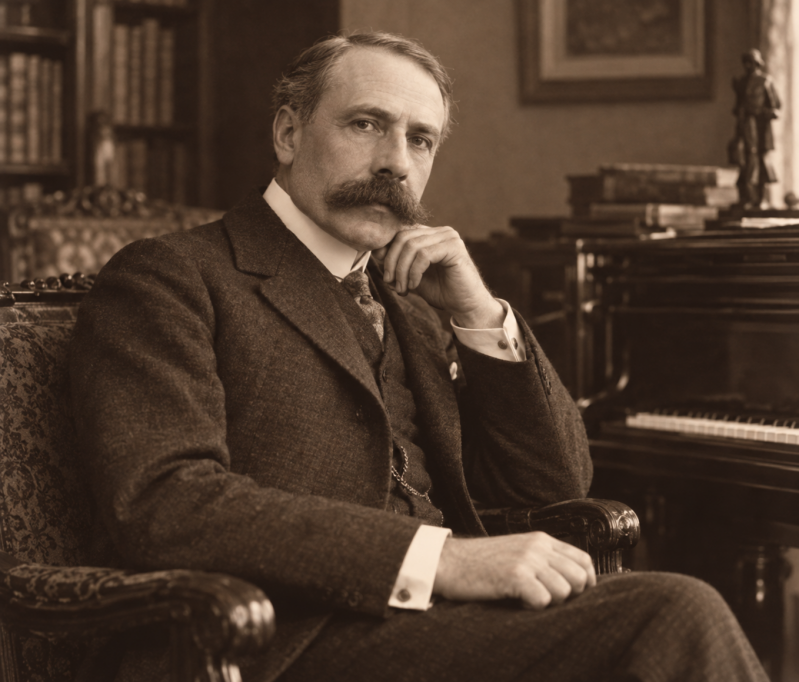

To many people, Edward Elgar is the sound of ceremony: sweeping orchestras, grand occasions and Land of Hope and Glory. Yet behind that public image was a more complicated man: playful, ambitious, sensitive to criticism and capable of writing music of extraordinary tenderness. For Hidden Lives Theatre, it is the man behind the music who invites a closer look.
Elgar was born in 1857 at The Firs, a cottage near Worcester with the Malvern Hills in view. His father ran a music shop and worked as a church organist, giving young Edward access to instruments and scores. The family could not afford to send him to a great European conservatoire, so he taught himself much of what he needed to know. Before fame arrived, he earned his living as a local musician and teacher. One of his jobs was leading the band at the asylum in Powick, between Worcester and Malvern. Great music can have surprisingly practical beginnings.
Worcestershire remained part of Elgar’s life and imagination. He knew its lanes and hills intimately, and Malvern became a home for him and his family. There was humour in his private life, too: he enjoyed cycling, making kites, writing cryptic notes and playing jokes on friends. It is an appealingly different picture from the solemn figure we might imagine beneath the moustache.
A crucial person in his story was Caroline Alice Roberts, whom he married in 1889. Alice believed in his talent when success was far from certain. She encouraged him, helped manage the demands of his career and shared the setbacks along the way. Their daughter, Carice, was born the following year. Elgar’s eventual rise was remarkable, but it was neither sudden nor solitary.
His breakthrough came when he was in his forties. In 1899, his Variations on an Original Theme, now known as the Enigma Variations, brought him widespread attention. Each variation offers a musical portrait of someone in his circle. Alice is there, as are friends whose personalities emerge through affection, wit or gentle teasing. “Nimrod”, one of the best known, portrays his friend and publisher August Jaeger. What sounds magnificent in a concert hall began with close human relationships.
Birmingham holds an important place in the next chapter. Elgar wrote The Dream of Gerontius for the Birmingham Triennial Musical Festival, and it received its first performance at Birmingham Town Hall in 1900. That premiere disappointed him: the ambitious new work had not been given the preparation it needed. In time, however, it came to be recognised as one of his greatest achievements. Birmingham heard it first, even if its full force took longer to be appreciated.
The honours followed, including a knighthood. But public triumph did not make Elgar’s life simple. After Alice’s death in 1920, he composed comparatively little. The contrast between the celebrated composer and the private man facing loss is part of what makes his story so moving.
And then there is the Enigma itself. The variations’ portraits can be identified, but Elgar also hinted at a further musical puzzle: something that runs alongside the work without being heard directly. He never disclosed its answer. Was it a clever musical game, a private message, or something more personal? We may never know.
Perhaps that is the best place to begin a new show: with the music we recognise, the people who helped shape it, and the questions Elgar left behind.
Hidden Lives Theatre is developing Elgar: The Man Behind the Enigma for 2027. Follow its progress at hiddenlivestheatre.co.uk.